Who is Collatz?

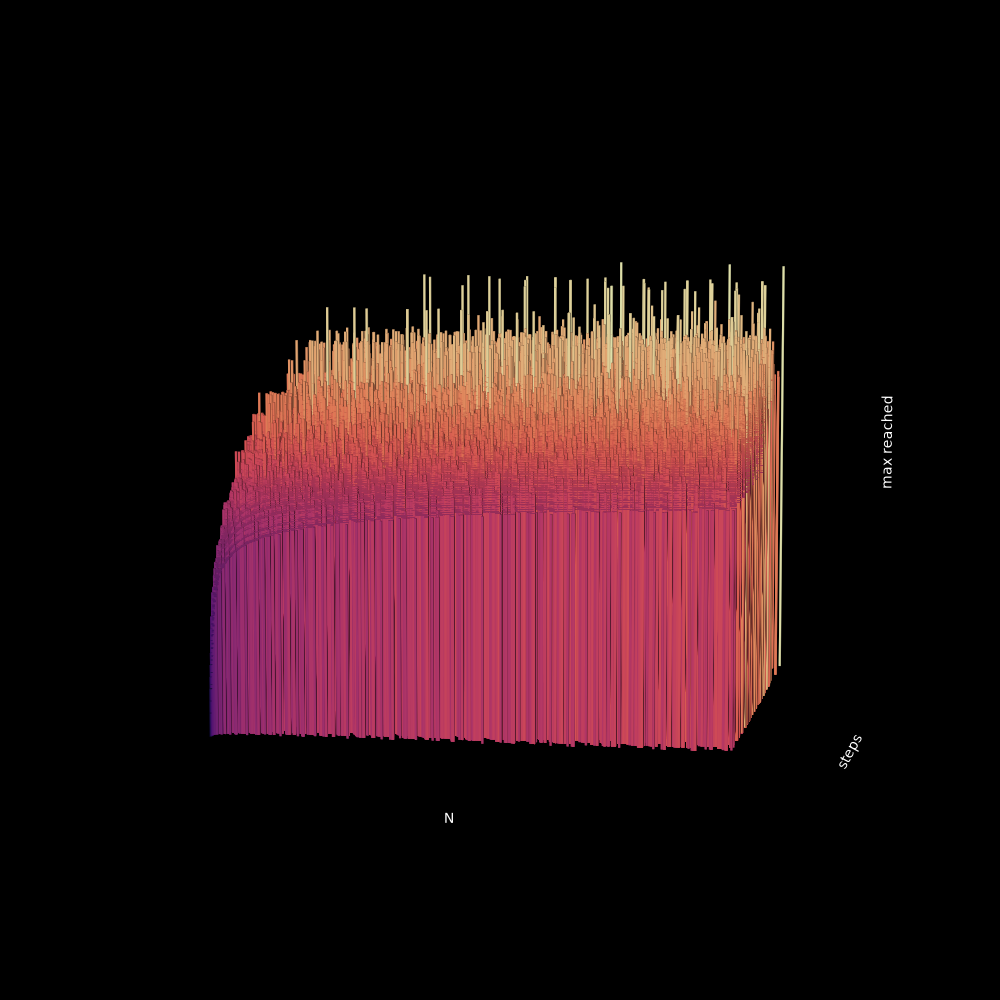
Or was, I guess.
It started as a dummy problem, to experiment with Python generators, toying with memory vs. speed, that sort of stuff.
And I got hooked. Fascinated by the patterns my mind seem to find in it, wants to find in it.
Collatz conjecture: given any number, if it's even divide it by 2, if it's odd triple it and sum 1. Then keep repeating with the obtained number. You'll always get to 1.
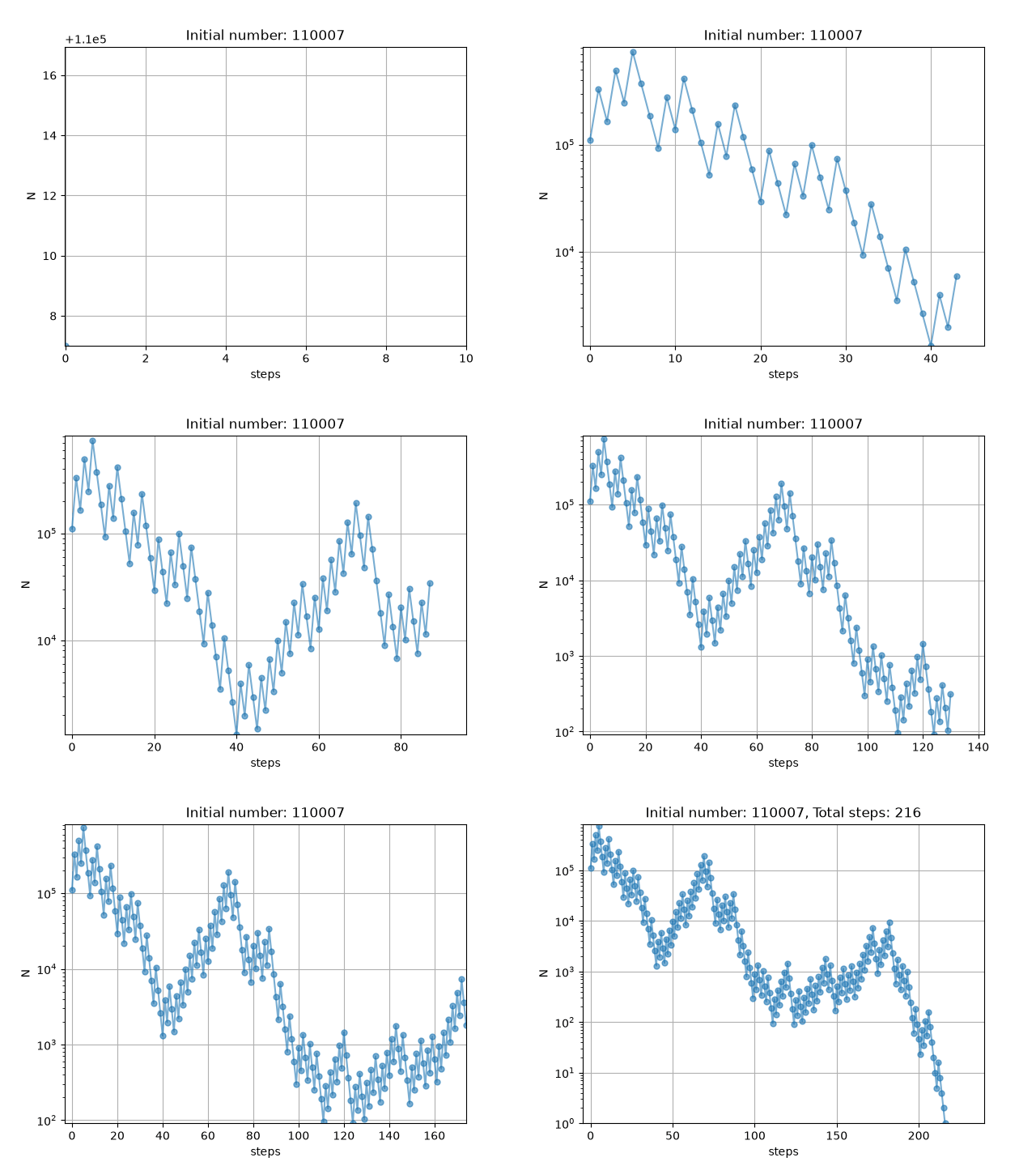
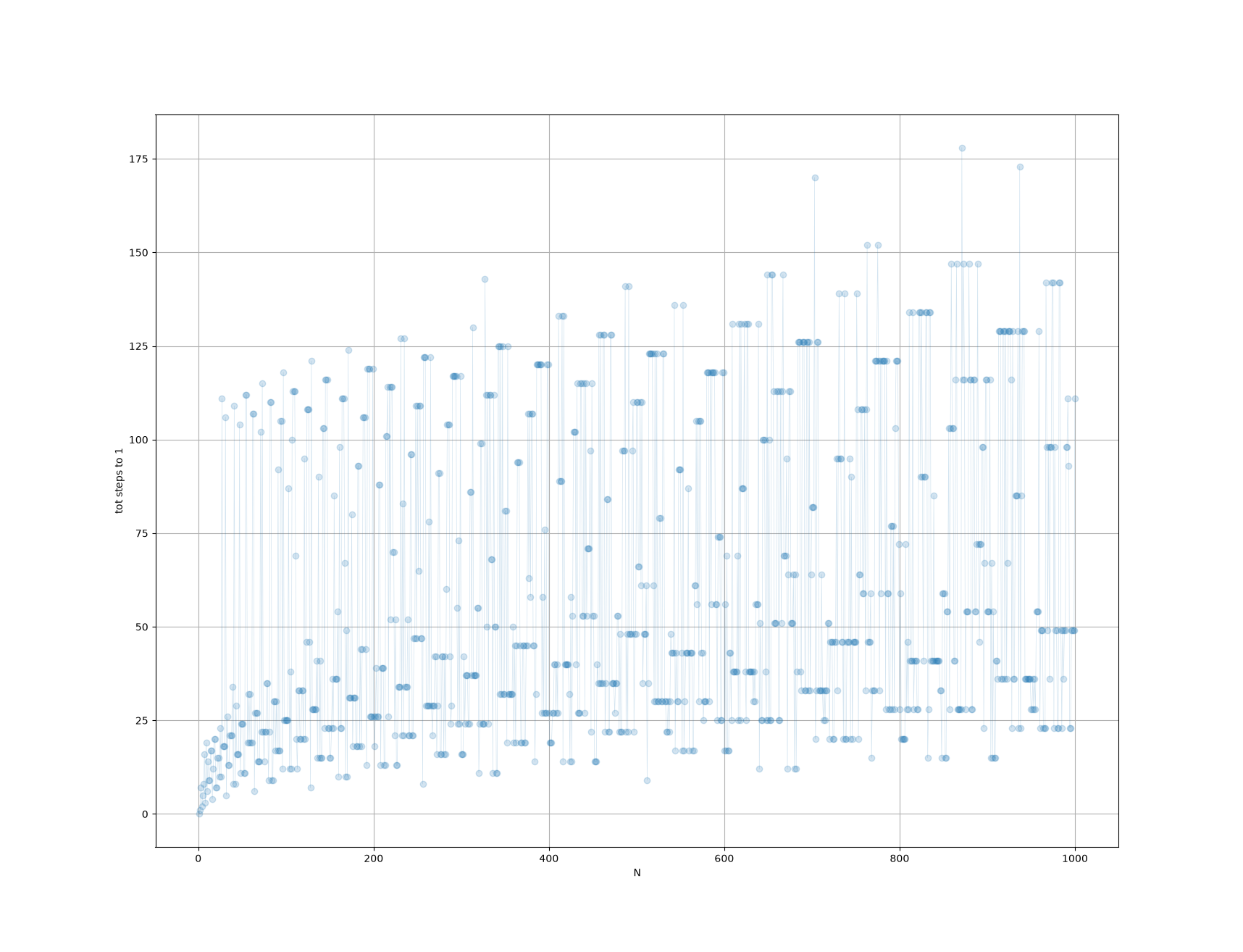
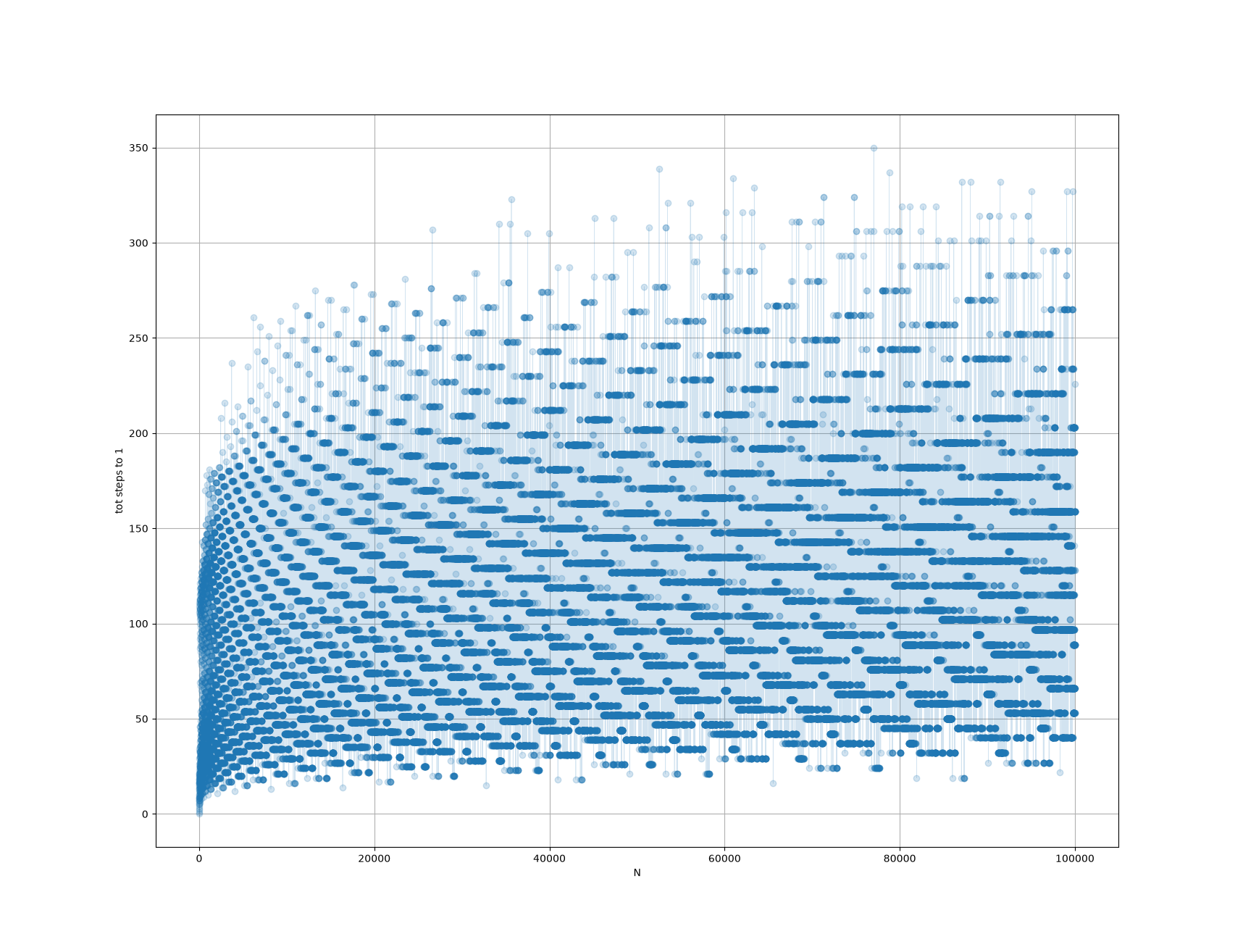
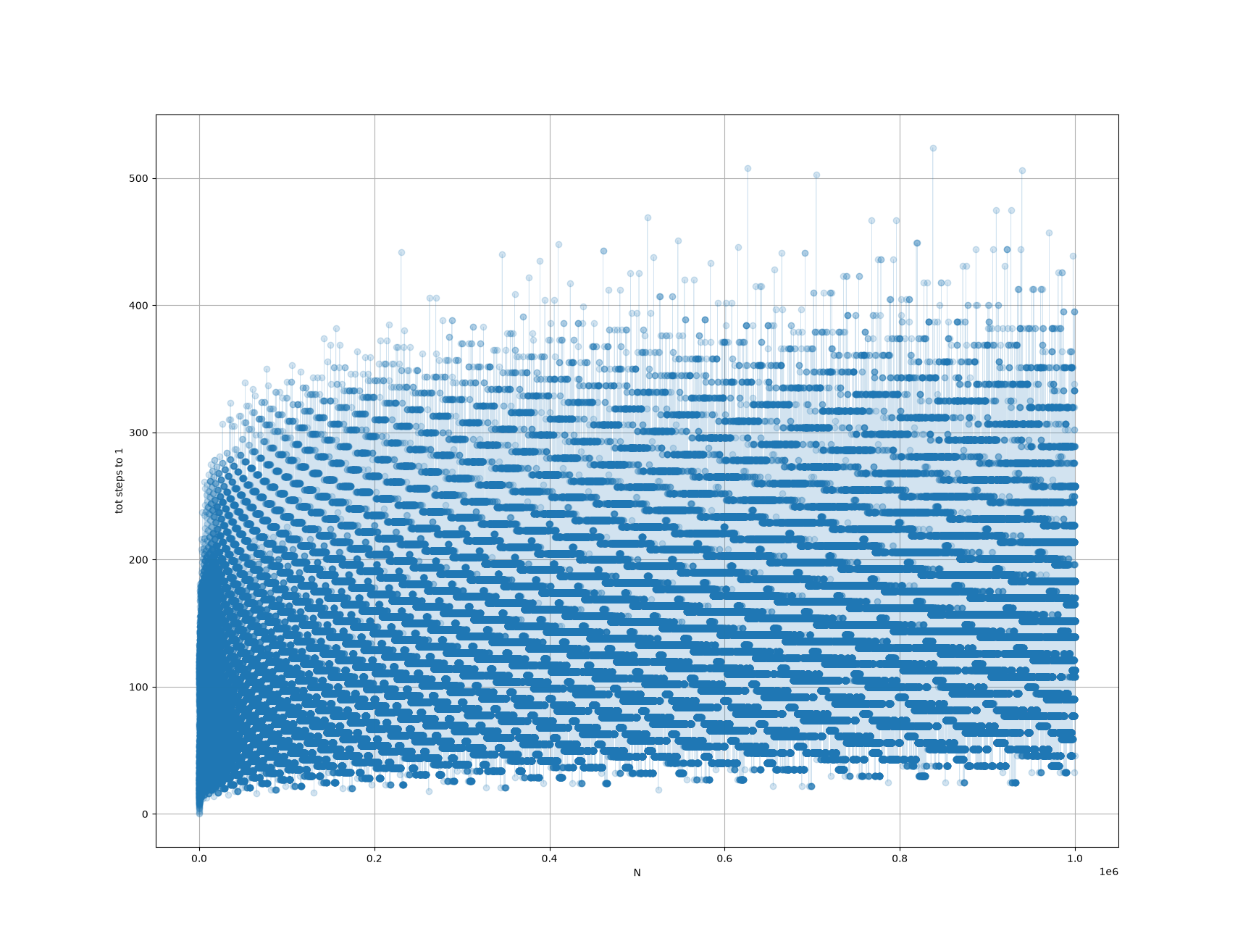
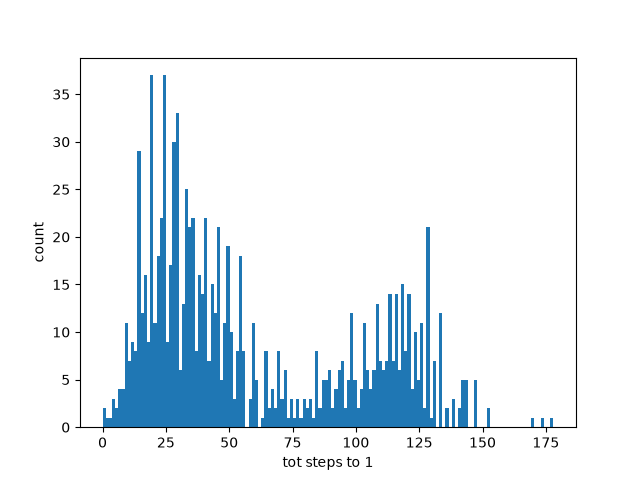
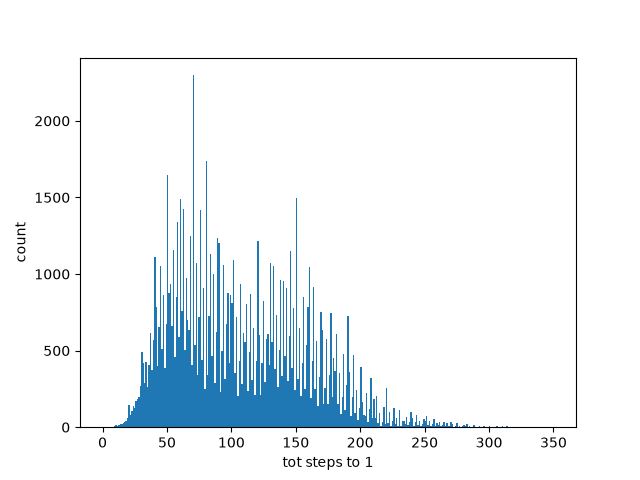
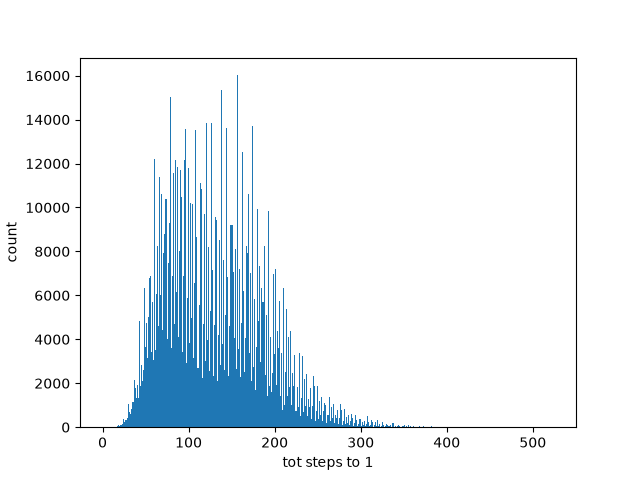
Top left to bottom right: steps to 1 for all integers up to 1 million; histogram of step count occurrences for all integers up to 1 million; steps to 1 for all integers up to 100k; histogram of step count occurrences for all integers up to 100k; steps to 1 for all integers up to 1k; histogram of step count occurrences for all integers up to 1kTop left to bottom right: steps to 1 for all integers up to 1 million; histogram of step count occurrences for all integers up to 1 million; steps to 1 for all integers up to 100k; histogram of step count occurrences for all integers up to 100k; steps to 1 for all integers up to 1k; histogram of step count occurrences for all integers up to 1k
Fairly simple procedure. Very nice to toy with generators. Nobody was ever able to demonstrate this conjecture.
Incidentally, there's a 1M $ bounty for its solution.
And geez... I started plotting around, dumping the various outcomes and statistics into 2D space.
The code is in my public notes.
I couldn't stop seeing the beauty. Elegance. A sequence that wants to be chaotic but doesn't manage. It's pulled towards some order.
And yet, impossible to figure out what this order is.
It's hunting me. And judging by the extent and variety of the Wikipedia page, I'm in good company.